So… what exactly is rPET?
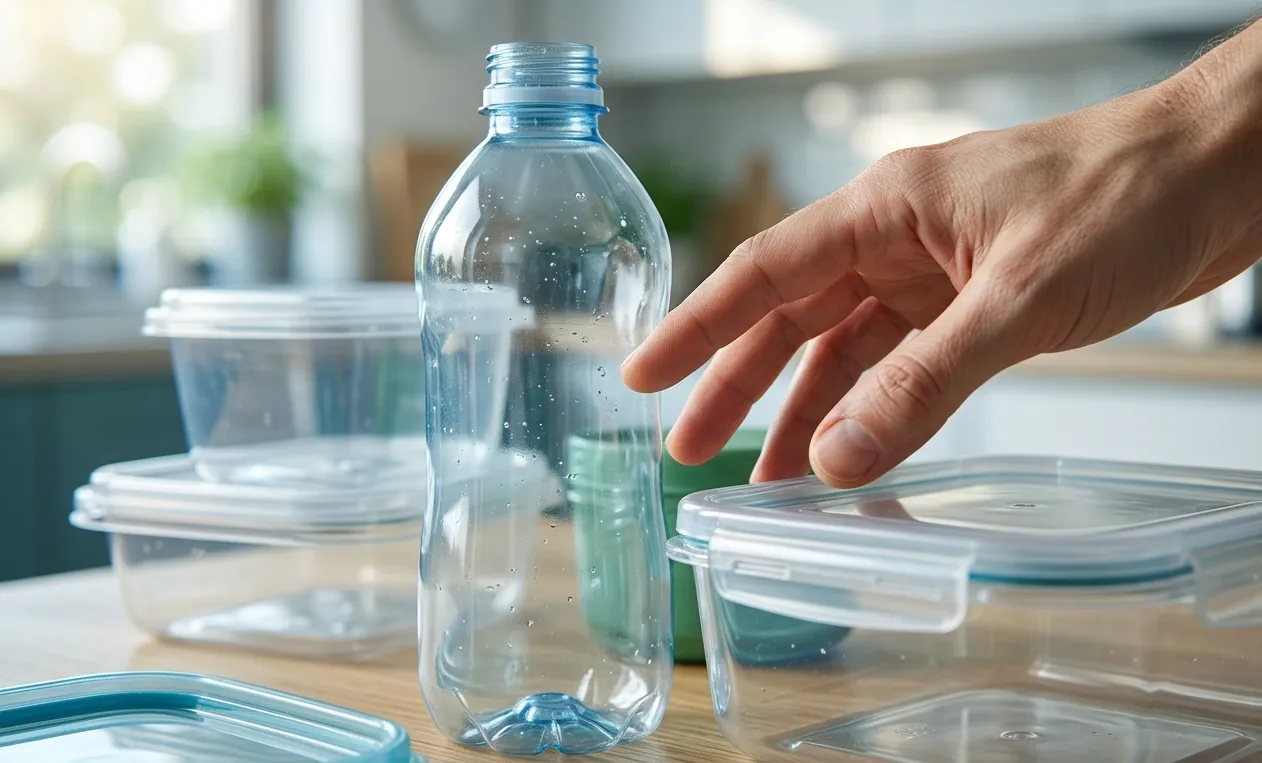
Start with PET, the transparent, lightweight plastic used for drink bottles, salad tubs, and a surprising amount of polyester clothing. When those items are collected after use, they can be reprocessed into rPET. The term doesn’t describe a different plastic; it describes the same polymer on its second life. You may also see “PCR” (post-consumer recycled) on labels, which simply refers to where the recycled content came from. Most packaging grade rPET is PCR; some streams are PIR (postindustrial), meaning clean production scrap.
How rPET is made, in real life
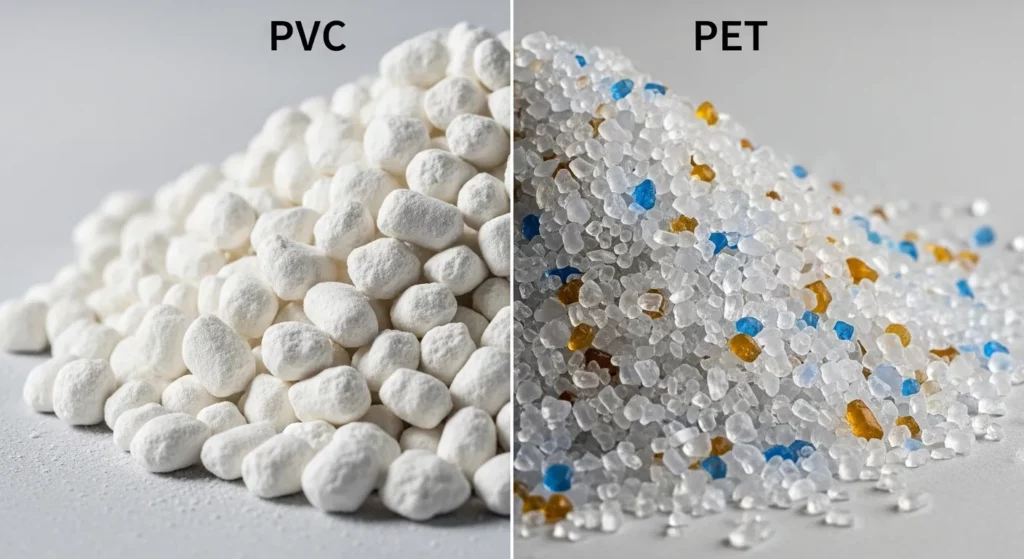
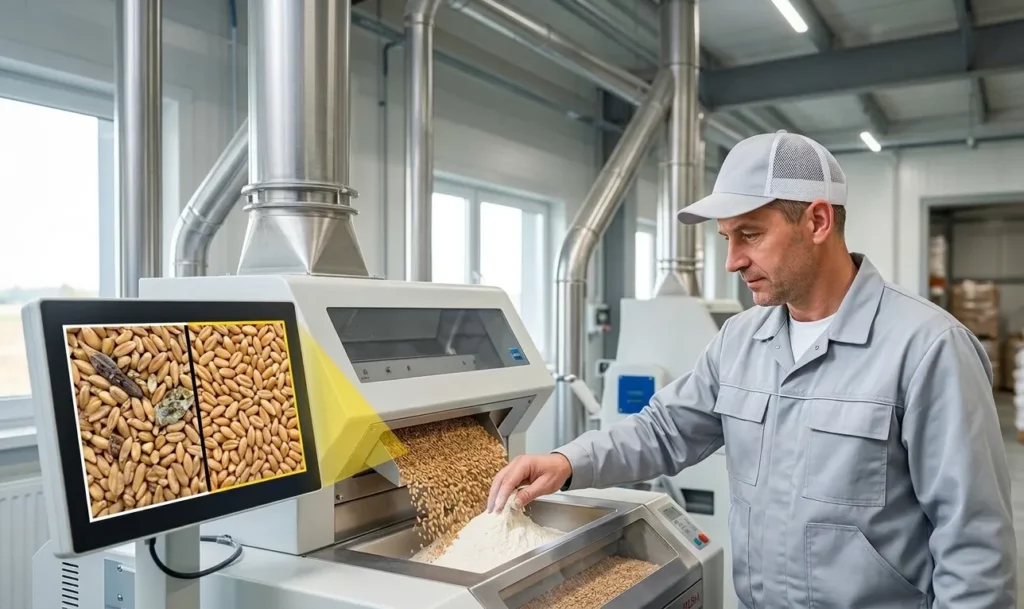
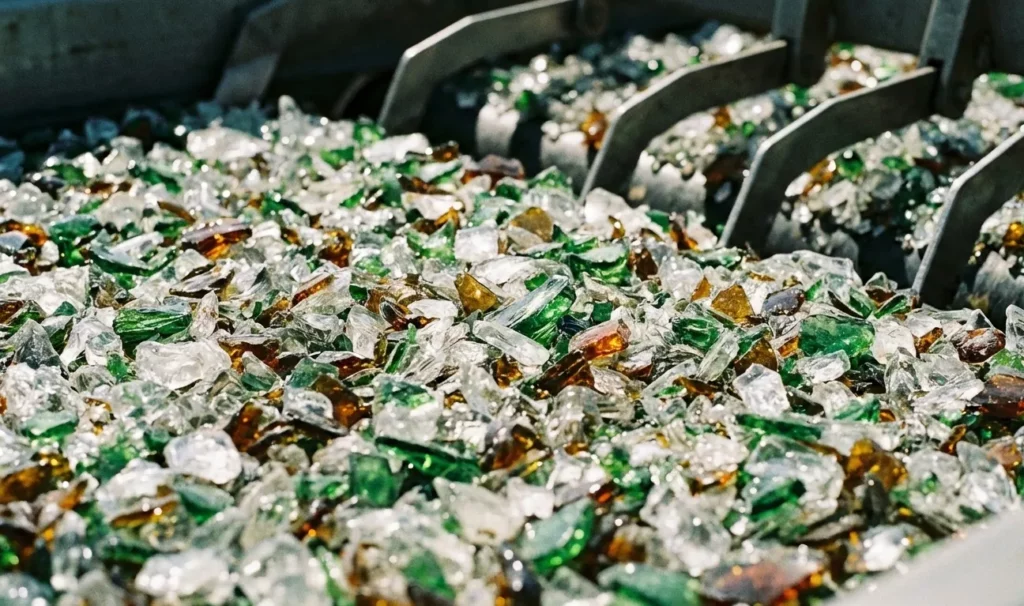
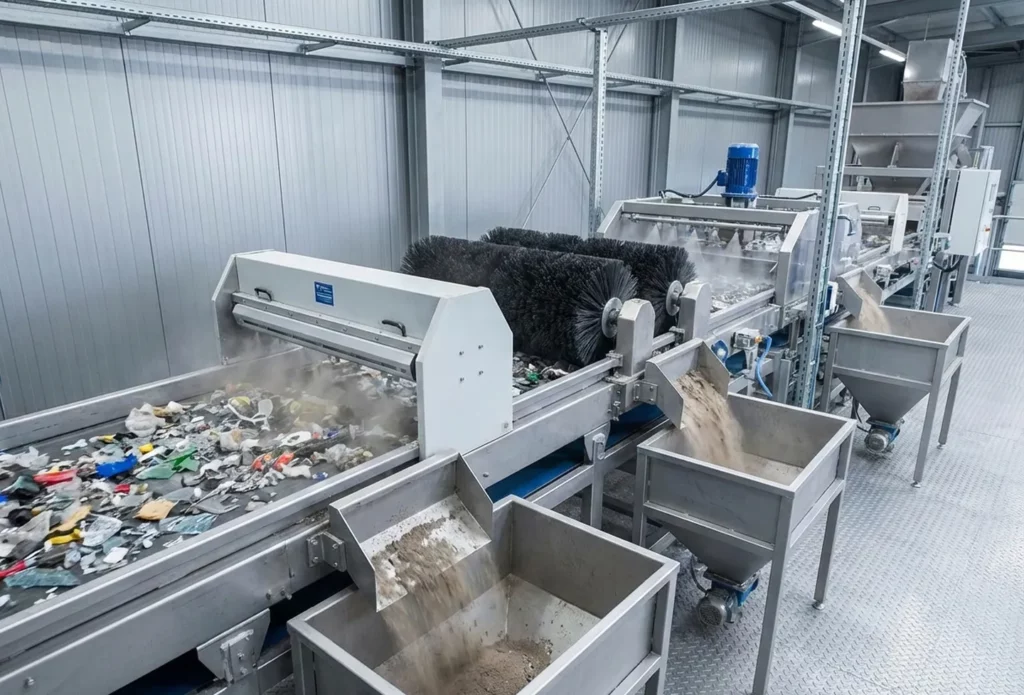
Picture a bale of used bottles coming off a truck at a sorting facility. Object Sorters pick out PET from the chaos and send it to be shredded into flakes. Those flakes get a deep clean. Labels, glues, and residues are washed off and then they’re run through decontamination steps that strip out anything you don’t want near food. Many recyclers use vacuum decontamination or a process called solid-state polycondensation (SSP) to rebuild polymer chains so the material behaves more like fresh resin. Before the flakes reach the “clean” stage, however, they go through an additional sorting step, already in flake form. At this point, polymer and color sorting systems are used. This allows contaminants to be removed from much smaller fractions that may have gone undetected earlier in the process. In addition, sorting the flakes into different color fractions makes it possible to classify the material for specific end uses, particularly for producing pellets in defined colors. This step plays a key role in determining the final product. Optionally, a UV sorting system can also be installed to separate fluorescent and aged flakes, further supporting the achievement of food grade quality.
The clean flakes are melted and turned into pellets. Converters take those pellets and make new preforms, bottles, thermoformed trays, or sheets. The whole chain works best when the feedstock is clear, consistent, and actually PET.

Mechanical recycling like this is doing the heavy lifting today. Chemical routes, breaking PET back to its building blocks and rebuilding it, are growing, especially for mixed colors and hard to clean streams, but they’re newer and not yet available everywhere.
rPET vs. virgin PET: what changes and what doesn’t
Functionally, rPET can match virgin PET for many packaging and fiber applications. The noticeable difference is often aesthetic: at high recycled percentages you might see a faint tint compared with the very clear look of fresh resin. Additives and careful feedstock selection can reduce that. The environmental side is where rPET generally performs better. It uses less virgin petrochemical material and has a lower overall production footprint when the recycling system runs efficiently. Pricing is not a simple up or down decision. It follows oil markets, bale quality, policy incentives, and demand, which means prices can fluctuate. The key point is to plan for a range rather than a single figure.
Safety, without the marketing gloss
Food grade rPET is not a guess. It’s the outcome of approved processes and testing. In Europe, recyclers seek EFSA opinions for their decontamination steps; in the U.S., the FDA issues letters of no objection for systems that meet its criteria. Finished packaging still needs migration testing under the conditions you’ll actually use:time, temperature, and the type of food or drink matter. If you’re buying, ask for the paperwork up front: regulatory status, process controls, and test reports tied to your application.
Design so it can be recycled again
Recyclability isn’t just about the base resin. Mono material PET bottles and trays are easier to sort and reprocess at quality. Labels that wash off cleanly help. Hard to remove labels can interfere with the sorting process at the object sorting stage. However, modern AI and Deep Learning systems can effectively handle this by recognizing and classifying specific types of bottles despite the presence of labels. Labels can also be removed later in the process, for example during flotation or by using systems designed to separate the lightest fractions. Clear or light blue PET yields the most versatile rPET; heavy tints limit what the next life can be. Standard polyolefin closures require a proper approach as well. They can be removed earlier in the process before further treatment, or separated later, in flake stage, during polymer sorting, or during color sorting (based on differences in flake transparency).
Where rPET shows up
You can find rPET in drink bottles, food containers, shampoo and cleaning bottles, and in many textiles like fleece, tote bags, and carpets.Films, straps, and even 3D printing filament use it too. In short: it’s common, and it is becoming more important as recycled content rules become stricter.
The practical challenges
Supply and quality are the constant tension. Food grade bales are in demand, and clear bottle feedstock commands a premium. Mixed colors or contamination push material toward lower value outlets and make it harder to hit high recycled content in transparent packaging. There’s also polymer “fatigue”: each heat history shortens chains a bit, which is why processes like SSP matter to restore intrinsic viscosity. In addition to SSP, UV sorting allows for the removal of degraded flakes. This makes it possible to improve material quality earlier in the process, which directly translates into better quality of the pellets. None of these issues are dealbreakers, but they’re the reasons serious buyers lock in supply, set realistic specs, and test on their own lines early.
Buying rPET without the headaches
If you’re sourcing rPET for packaging, treat it like any other critical input. Specify recycled content by mass and be clear that you mean PCR if that’s the goalDefine the optical and mechanical targets that are most relevant to your product, such as clarity and haze, Lab color, intrinsic viscosity for bottles, top load or impact strength, and sealability for trays.Ask for chain of custody documentation such as GRS or RCS if you plan to make public claims. Get the compliance evidence for your exact conditions of use, not a generic data sheet. Then run trials. Preform design, wall thickness, label and sleeve behavior, and line speeds will tell you more in a week than a dozen meetings.
What about textiles?
rPET fibers are, essentially, polyester made from bottle grade PET. The climate benefit depends on the feedstock and the system you’re comparing against, but the appeal is straightforward: less virgin polymer. If you’ll communicate about it, traceability matters. Use recognized standards and be careful with “ocean plastic” language unless it’s truly, verifiably sourced that way. Microfibre shedding is a real issue; fabric construction and care instructions (cooler washes, gentler cycles) help reduce it.
Quick answers to common questions
- Is rPET safe for food and drinks? Yes—when it’s produced with an approved process and the final packaging passes migration tests for your specific use.
- Can PET be recycled over and over? It can go through multiple mechanical cycles before properties drift; chemical recycling can reset it back to monomers.
- Can rPET bottles be crystal clear? Often, yes. With high quality feedstock and the right additives, clarity comes very close to virgin.
rPET is not a silver bullet, but it is a practical and scalable way to reduce virgin plastic in products people use every day. Design for it, source it with open eyes, and it will steadily reduce your footprint and strengthen your story without requiring consumers to change much at all.