When you start sorting glass, you shape the quality of every recycling stage that comes after your bin at home. Each choice you make supports cleaner streams in busy facilities relying on precision and stable material flow, which matters even more when you realize that only about 21% of all glass produced is recycled globally. As you learn how to handle colors, contaminants, and simple preparation steps, you gain practical confidence that influences real results. This guide provides a clear and friendly path through the entire process.
The basics of glass recycling – what does it really look like?
Glass can be recycled endlessly when handled correctly. Many people ask how glass is sorted, and the answer depends on the stage of production. At home, your job is organization. In professional plants, enormous volumes travel through conveyors, screens, and innovative optical sorting solutions (like sorters), reading thousands of particles per second.
In Europe, the overall collection rate for glass packaging reaches around 80.8%, showing how well-structured systems improve material recovery when the stream is clean and consistent.
At MEYER, we have optical systems supporting these processes, yet the foundation still begins with the material you sort on your end. Good initial habits lead to cleaner output in the long run.
Remember!
Glass recycling fosters a circular system, supported by informed decision-making at every stage. Once you grasp the basics, the workflow becomes surprisingly logical.
How to prepare glass before sorting?
Before technology enters the picture, you start with preparation, and this early stage is directly connected to the processes used in modern facilities based on glass sorting. Clean glass makes life easier for recycling facilities. Light rinsing helps. Removing caps, loose rings, or leftover food clears the path for cameras downstream.
Even advanced lines benefit from your simple steps. In plants using optical equipment, operators often say that well-prepared input increases efficiency. MEYER equipment works best with reliable streams, and preparation helps maintain that reliability.
How to sort glass for recycling? 4 rules that matter!
When learning how to sort glass for recycling, it helps to follow a short and simple set of principles, especially when facilities use detection toolslike Optical Sorters. These actions create the structure that the professional line needs to deliver refined cullet.
What do we mean?
- separate clear, brown, and green streams, giving facilities consistent material;
- remove caps, rings, and labels whenever you can, reducing noise for scanners;
- keep stones, ceramics, mirrors, and heat-treated cookware away from glass streams, because they disrupt melting processes;
- pack broken glass being sorted in a secure bag when moving it to a drop-off location.
Common contaminants in glass recycling and why they matter?
| Material / object | Why does it disrupt the process? | How do plants handle it? |
| Ceramics | Different melting point, destabilizes cullet batches | Optical rejection |
| Stones | High density, damages equipment | Mechanical screening + color sorting |
| Metals | Contaminate furnaces and cullet | Magnetic separation + optical rejection |
| Plastics | Light reflection differs, lowers purity | AI-driven separation + NIR modules + color separation |
How do advanced systems handle sorting in industrial facilities?
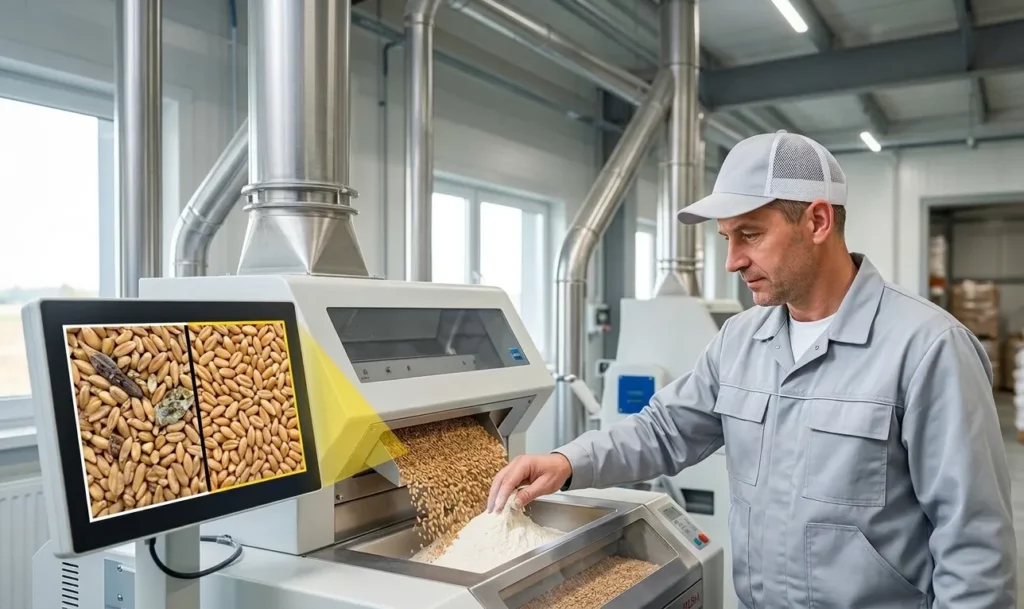
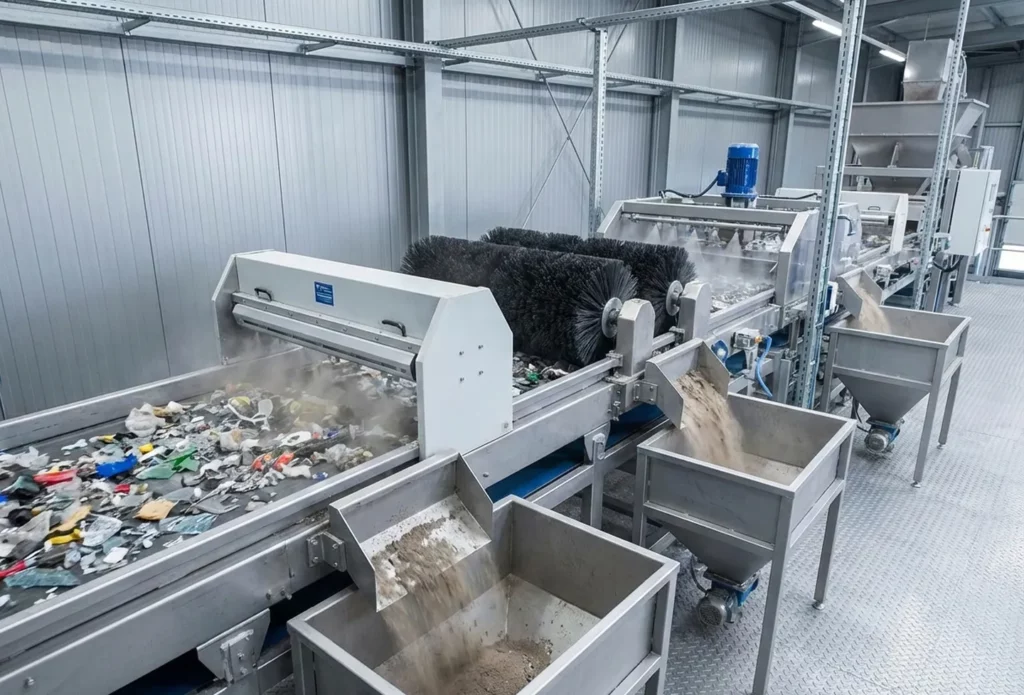
Once your part ends, industrial plants take over. This is where a glass sorting machine becomes essential. These machines combine specialized cameras, structured lighting, and fast ejectors to classify every particle.
Optical sorting technology works at high speed. Cameras capture details you never notice with the naked eye. At MEYER, we have imaging modules capable of reading subtle differences in shade or texture, helping plants achieve the desired output. Deep-learning software supports these cameras by reading consistent patterns in the stream.
Industrial sorting typically involves several stages. The first pass separates colors. The next stages allow for obtaining the cleanest possible material flow and transparent, uniformly colored fractions. The goal is steady and highly predictable cullet ready for remelting.
What happens to broken glass being sorted?
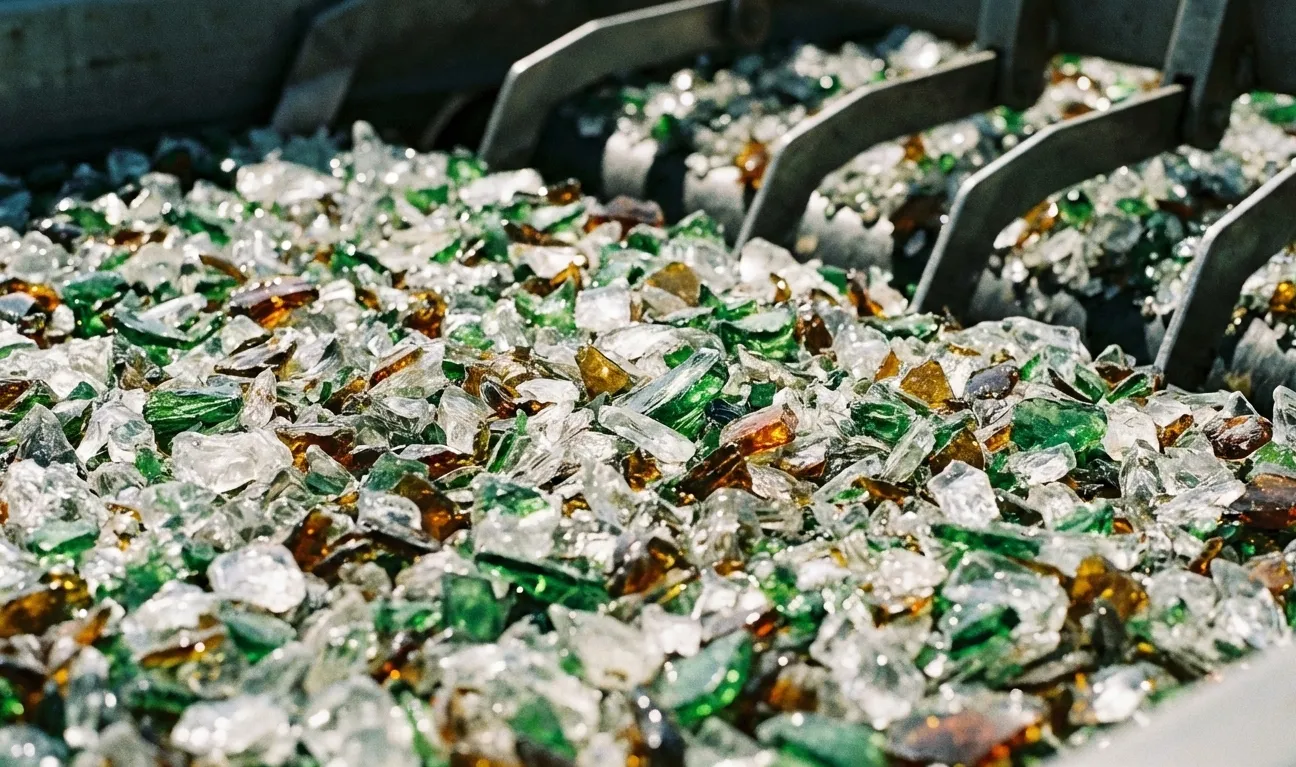
You rarely see whole bottles inside a recycling plant. The majority arrives already broken. Plants treat this as usual. Broken glass being sorted runs across vibrating decks, separating it by size. Smaller fragments fall through first while larger ones move forward.
Once sized, optical systems scan every particle. Cameras detect color and micro-details. Ejectors remove off-color pieces instantly. At MEYER’s Test Center, operators often show how small changes in tint influence classification. Watching it in action highlights how precise these systems have become.
Remember!
Broken material works perfectly in recycling as long as it’s clean, separated, and free from contaminants.
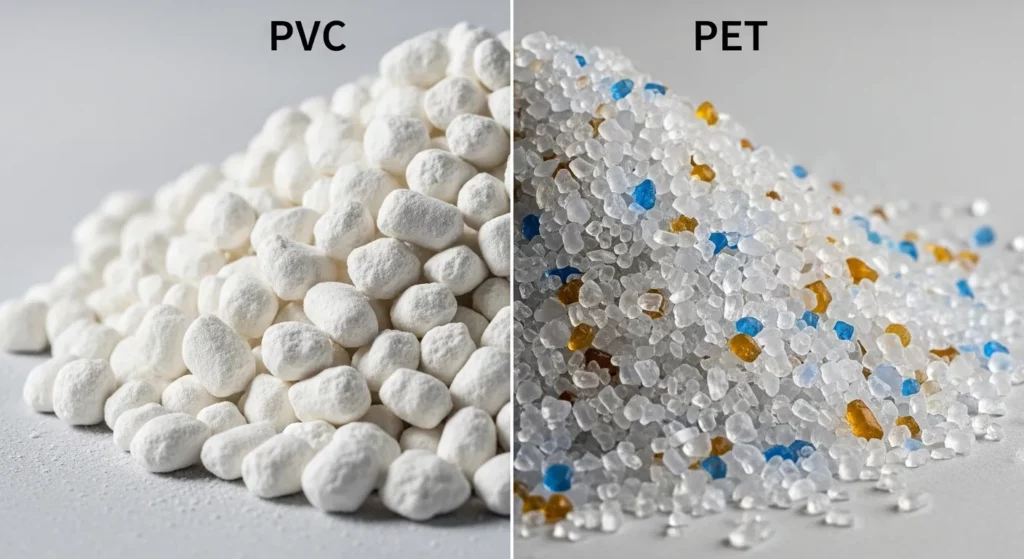
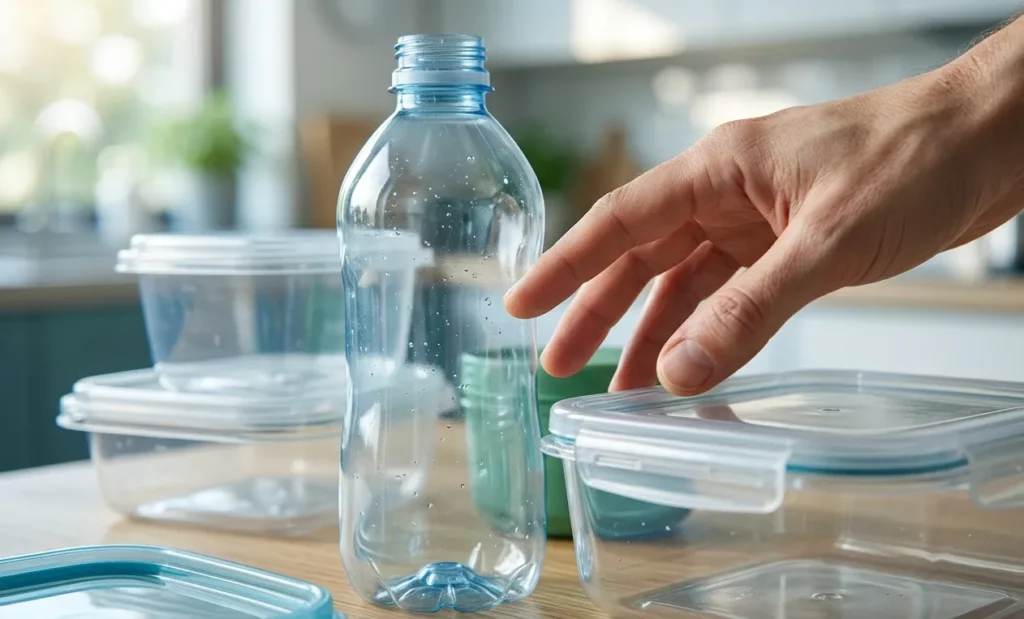
How does plastic get sorted from glass?
People often ask: How does plastic get sorted from glass? The answer stems from optical behavior, and many of the ideas behind this process are reflected in EU food safety standards, particularly in the context of optical sorting, as explained in our blog post.
Glass interacts with light differently from plastic, and plastics present their own range of density levels, textures, and transparency profiles. Machines read these distinctions instantly. AI models interpret edge structure and brightness, supporting fast and reliable separation on industrial lines.
“At MEYER, we have systems capable of recognizing shape and color variations, delivering stable performance even when material streams change. Some plants use density tables for additional refinement, creating well-organized flows that help keep each material in its dedicated cycle.” – MEYER Europe Technical Team.
Step-by-step workflow inside a modern glass sorting facility
A clear view of the step-by-step workflow becomes easier when you relate the entire process to insights discussed in the role of optical sorters, offering a broader perspective on how modern detection supports material recovery.
1. Delivery
Trucks unload material into receiving bays. Operators examine the batch.
2. Pre-cleaning
Machines remove papers, loose labels, and lightweight debris.
3. Screening
Screens separate materials by size to help with later detection.
4. Color sorting
An optical line separates green, brown, and clear cullet. A glass sorting machine rapidly reads each fragment.
5. Density refinement
Some plants use density-based methods to remove stones or ceramics.
6. Final polishing
A final optical pass clears remaining defects. MEYER equipment supports multi-stage workflows for plants needing high purity.
7. Storage
Clean cullet is moved into silos and later transported to furnaces.
The impact of AI and automation
AI reshapes how plants interpret material streams, and whenever you need guidance or want to begin planning improvements for your facility, just contact us to start the process. Instead of relying on fixed parameters, intelligent systems learn patterns over time, supporting adaptive behavior when streams shift or when batches vary.
At MEYER, we utilize AI tools that analyze shapes, textures, and colors with high precision. This increases stability for extensive facilities managing heavy flows. Automation also reduces labor pressure and improves consistency across shifts.
As recycling grows across Europe, AI becomes an essential part of the long-term strategy for material recovery.
References:
- https://www.recovery-worldwide.com/en/artikel/glass-recycling-current-market-trends-3248774.html
- https://www.acrplus.org/en/news/european-glass-packaging-recycling-reached-80-8-in-2023-4967
- https://www.recycledmaterials.org/
- https://www.sciencedirect.com/journal/waste-management