The Critical Challenge of PET and PVC Cross-Contamination
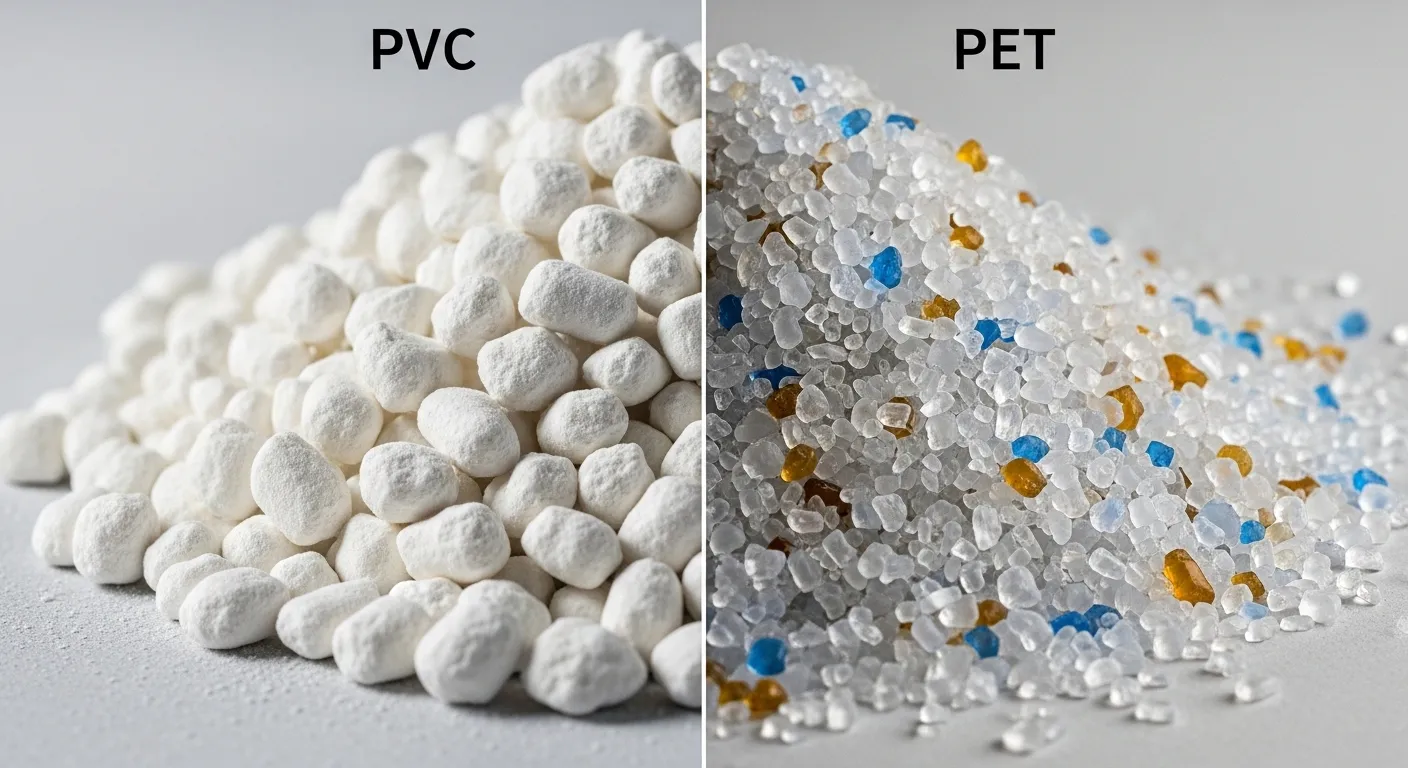
PET and PVC present a unique challenge in recycling streams due to their similar visual properties but vastly different chemical compositions. To understand why their separation is crucial, we need to examine what happens when these materials mix.
When even small amounts of PVC (as little as 50 parts per million) contaminate PET during the recycling process, several devastating effects occur:
- The PVC releases hydrochloric acid when heated to PET processing temperatures (around 270°C), causing catalytic degradation of the PET polymer chains.
- This degradation significantly reduces the intrinsic viscosity of the recycled PET material.
- The contaminated material exhibits yellowing and increased brittleness.
- The mechanical properties of the final recycled product become unpredictable and generally inferior.
Beyond these technical issues, PVC contamination can physically damage processing equipment through corrosion from the released hydrochloric acid, leading to costly repairs and downtime.
The Science Behind Optical Sorting
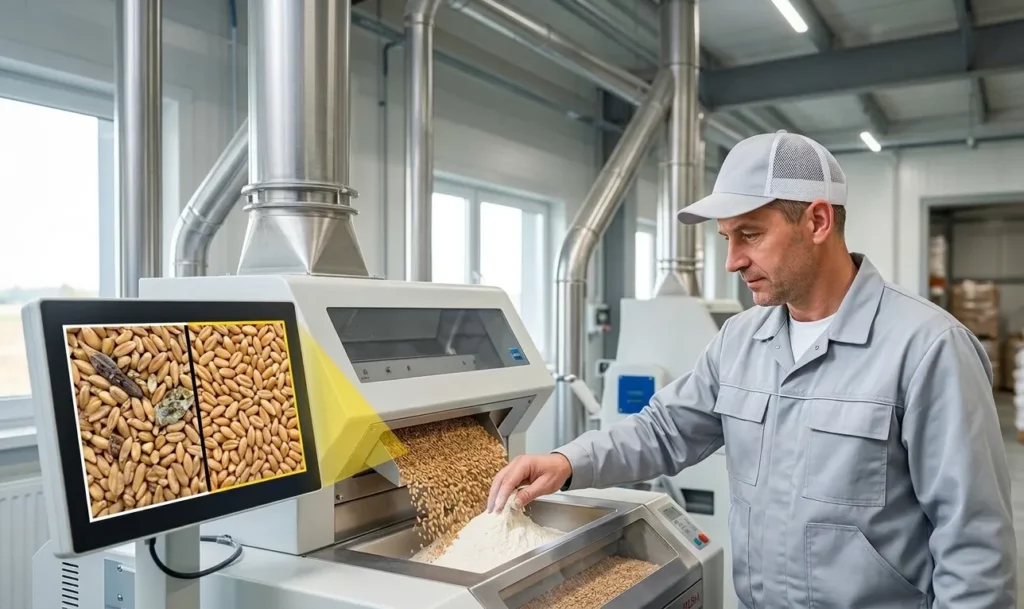
Optical sorting stands as one of the most advanced technologies for automated plastic separation. These systems rely on several key scientific principles:
Near-Infrared (NIR) Spectroscopy
The cornerstone of modern plastic sorting is NIR spectroscopy. This technology exploits the fact that different plastic polymers absorb and reflect infrared light in distinctive patterns based on their molecular structure.
When NIR light hits a plastic flake or bottle:
- The light penetrates slightly below the surface
- Certain wavelengths are absorbed based on the chemical bonds present
- The reflected light creates a unique “spectral fingerprint”
- This fingerprint can identify PET versus PVC with high accuracy
Modern NIR sensors can detect these subtle differences at speeds fast enough to sort thousands of items per minute on a conveyor belt.
X-Ray Transmission Technology
To complement NIR, many advanced systems incorporate X-ray transmission technology. This works especially well for PVC detection because:
- PVC contains chlorine atoms, which absorb X-rays differently than the carbon, hydrogen, and oxygen atoms in PET
- The density difference between PET (1.38 g/cm³) and PVC (1.3-1.45 g/cm³) can be detected through X-ray absorption rates
- Even black-colored PVC, which might confound some optical systems, can be identified through its X-ray signature
RGB Camera Systems
Visual identification also plays a role in modern sorting systems:
- High-resolution cameras capture detailed images of each item
- Advanced image processing algorithms analyze shape, transparency, and color
- Machine learning systems continuously improve identification accuracy
- This method helps identify contaminants that might have similar NIR profiles but different visual characteristics
The Technical Process in Action
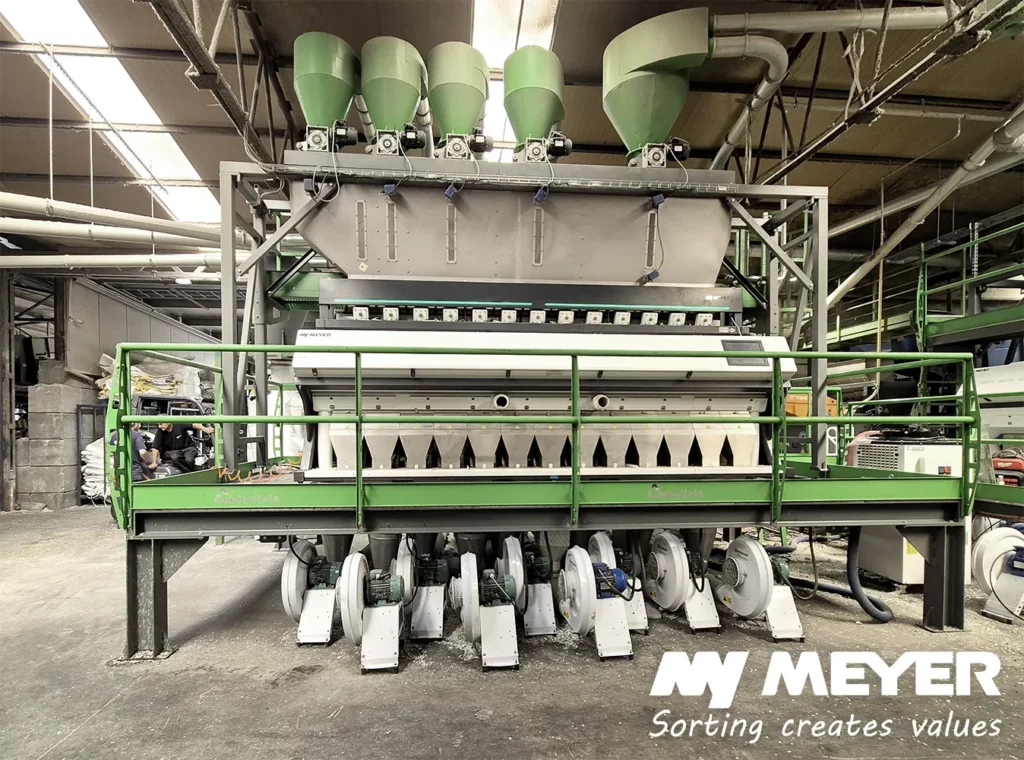
To understand how this technology works in practice, let’s follow a mixed stream of PET and PVC materials through MEYER’s sorting system:
- Material Preparation: The incoming material stream is first prepared through sizing, washing, and drying to optimize detection accuracy.
- Singulation: The mixed plastic pieces are spread onto a high-speed conveyor to ensure individual items can be properly analyzed.
- Multi-Spectral Analysis: As items pass through the detection zone, they are simultaneously scanned by:
- NIR spectrometers operating at multiple wavelength bands
- X-ray transmission sensors measuring atomic density
- High-resolution RGB cameras capturing visual characteristics
- Real-Time Data Fusion: The system cross-references all sensor data, creating a comprehensive material profile for each item in milliseconds.
- Decision Algorithm: The decision engine compares profiles against known signatures for PET and PVC, calculating a confidence score for each classification.
- Precision Ejection: Items identified as PVC are targeted by air jets precisely calibrated to their position, mass, and aerodynamic properties.
- Quality Control: Secondary sensors confirm successful ejection, and the system tracks sorting efficiency metrics in real-time.
- Continuous Calibration: Throughout operation, the system periodically checks against reference materials to maintain calibration and adjust for environmental factors.
Overcoming Technical Challenges
MEYER’s systems have had to solve several fundamental technical challenges to achieve reliable PET/PVC separation:
Speed vs. Accuracy Tradeoff
Historically, increasing throughput meant sacrificing identification accuracy. MEYER’s systems overcome this through:
- Custom-designed high-speed NIR sensors with response times under 1 millisecond
- Parallel processing architecture that performs multiple analyses simultaneously
- Optimized conveyor systems that maximize spacing without reducing throughput
- Predictive algorithms that begin analysis before items fully enter the detection zone
Handling Material Variability
Recycled plastic streams present enormous variability in:
- Size and shape of fragments
- Surface contamination affecting readings
- Color additives masking spectral signatures
- Multi-layer materials with different polymer types
MEYER’s systems address these challenges through adaptive detection parameters that automatically adjust sensitivity based on the characteristics of the current material stream.
Environmental Interference
Operating conditions in recycling facilities can introduce various interferences:
- Dust and moisture affecting optical readings
- Temperature fluctuations changing material properties
- Vibration disturbing precise measurements
- Ambient light affecting visual identification
To counter these issues, MEYER’s sorters employ environmental monitoring systems that compensate for changing conditions and sealed optical pathways that prevent contamination of sensitive components.
Economic and Environmental Impact
The implementation of advanced optical sorting for PET/PVC separation delivers substantial benefits:
- Higher Value Recyclate: Properly sorted PET can command premium prices in recycling markets.
- Reduced Processing Costs: Preventing PVC contamination extends equipment life and reduces downtime.
- Increased Recycling Rates: More efficient sorting makes previously uneconomical recycling streams viable.
- Environmental Protection: Proper separation prevents the release of hazardous chlorinated compounds during processing.
Plastic Separation Technology
MEYER continues to advance their sorting technology with several emerging developments:
- Hyperspectral Imaging: Expanding beyond NIR into hundreds of spectral bands for even more precise identification.
- Artificial Intelligence Integration: Deep learning systems that can identify new packaging materials without explicit programming.
- Miniaturization: More compact systems that can be deployed at smaller recycling facilities.
- Tracer Technologies: Working with packaging manufacturers to incorporate harmless tracer compounds that make identification even more reliable.
Conclusion
The technical challenge of separating PET from PVC exemplifies the complexity of modern recycling. Through sophisticated multi-sensor optical sorting technology, MEYER has developed systems capable of identifying and separating these similar-looking but chemically incompatible materials with unprecedented accuracy.
As we move toward a more circular economy, these advanced sorting technologies will play an increasingly vital role in transforming waste streams into valuable resources. The success of PET recycling depends heavily on maintaining material purity, and MEYER’s innovative approach to optical sorting represents a significant step forward in addressing one of recycling’s most persistent technical challenges.
By enabling the efficient removal of PVC contaminants from PET recycling streams, these systems not only improve the economics of plastic recycling but also contribute substantially to environmental sustainability goals.